

The winning formula - Part 1
Reflecting on one of our finalists from the Short Story Award 2025

We’re less than two weeks away from the opening of the Frazzled Lit Short Story Award 2026, so I thought it would be a useful exercise to reflect on some of the outstanding stories from last year’s competition, and what made them special to us. Last week, we looked at last year’s winning story, Limbo Nights by Gary Finnegan. Today, I want to look at one of our finalists, The Canal by Seamus Scanlon.
The Canal

By Seamus Scanlon.
Last year’s judge, Nuala O’Connor, described The Canal as ‘… a love letter to Galway city and a mourning of lost youth, and lives without opportunity. A moving story, with great language flourishes.’
The Canal comes in at just 838 words, and what the writer manages to do in such a small space is breathtaking. An entire city is conjured, populated with a panoply of rich and flawed characters, and it is all done with prose that is gloriously clear and precise. We knew we were in the hands of a skilled writer when we read this opening:
In Galway I walk along the canal from University Road all the way down to the end of Dominic Street. Black heavy clouds hang low over the grey streets.
My mother and her best friend Nancy use this route on Saturday nights to walk into town. They hold hands in the dark. They blow Sweet Afton cigarette smoke into each other’s faces. And drink vodka and orange from Galway Mineral Red Lemonade bottles. Later on, they will walk out to Lower Salthill to the Oasis in The Warwick. It was behind the Warwick I was conceived ten years ago. My mother is 26 now. I am 10. Do the math.
The writer situates us immediately. We are in Galway, walking wet streets under dak clouds. The voice is clear and uncomplicated, as befits the young tearaway narrator, and it is also precise. The clouds aren’t just black, they are also heavy, and hang low over wet, shiny streets. I was immediately transported into the narrative world, to walk alongside the character, unsure of where he was taking me but assured that I was in the hands of a skilled storyteller. Two new characters are introduced then, Nancy and his mother. And here’s another invitation: we are entering into the quiet intimacy of their friendship, seen through the eyes of the narrator. Is there a hint of jealousy? I think there is, but also I find a sense of detachment coupled with despair. The narrator is illustrating how it is in his life, but we are still not entirely certain of how he feels about it.
Do the math is such a deft line, and acts as an invitation to the reader to enter this character’s world. We are not allowed to be passive here, rather we are asked to actively engage with the story, and to become a part of the narrative.
A few paragraphs on, we come to this:
Nancy stayed with her aunt and uncle, the Leepers (I called them the Lepers), and their daughter, Oasis – joke – it was Mary. She had only one hand. Not sure what happened. Her father was a famous butcher in High Street. I am just saying.
This swaggering paragraph is executed with great skill, and delightfully deadpan humour. Mary has one hand, and her father was a butcher. The writer could have left it there, and perhaps it would’ve worked if he had, but the next line, I am just saying, is so appropriate to the narrator, and such a wonderful delivery of a dry punchline that it had me laughing out loud.
There is so much more to enjoy in this story, like this list of Nancy’s demands of the narrator.
Nancy also gave me stolen hugs. And crisp fivers. And Tayto crisps. And told me to get ‘that hair’ cut. And to stop running wild. And to stop pulling knives. And to stop arsing around. And to drop Mary Leeper. And to stop being Galway’s number one (and only) arsonist. And to stop sleeping out in the back garden. And to stop telling people my name was Oasis. And to wear shoes when I walked along the canals of Galway with their black deep water and their strong silent currents that carried babies and forlorn boy-girls out to the far sea.
I hope you will read The Canal, so I don’t want to give away the wonderful ending. I will say that in just over 800 words, Seamus Scanlon created what I rate as one of the very best short stories by any Irish writer, one worthy of the pen of Donal Ryan himself. The setting, the characters, the quiet desperation of the young narrator, are all illustrated with the panache of a skilled author, and with fine touches of humour. It is a marvellous story, and we feel very honoured to feature it in Frazzled Lit!
Jennifer, co-Editor-in-Chief
You can read many of the successful stories from last year’s competition in Issue 3, our special competition issue.
Dazzle us in June!
The Frazzled Lit Short Story Award 2026 will open for submissions on June 1st, and we feel hugely honoured to have twice Booker-longlisted and multi award-winning Irish author Donal Ryan as this year’s judge.
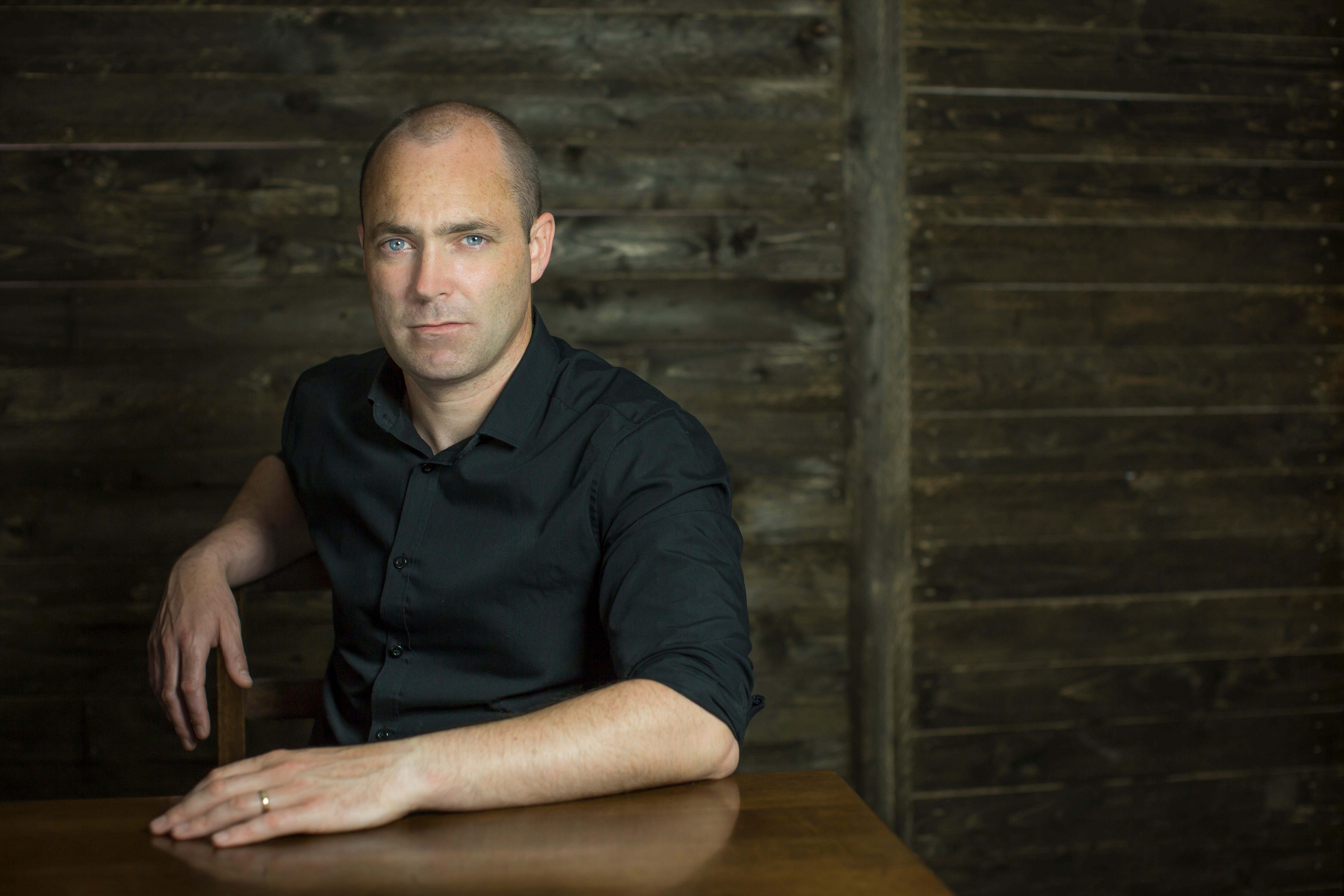
Donal Ryan has long been one of my literary heroes, and I’ve been most fortunate to meet him, and to have him read some of my work. His short fiction and novels are among the finest works ever produced by an Irish writer. He has published seven number-one bestsellers, plus a short story collection. He has won many awards for his work, including the European Union Prize for Literature, the Guardian First Book Award, and six Irish Book Awards, and has been shortlisted for many more, including the Costa Book Award and the Dublin International Literary Award.
He was longlisted for the Booker Prize in 2013 for his debut novel, The Spinning Heart, and in 2018, for his fourth novel, From A Low and Quiet Sea. The Spinning Heart was voted Irish Book of the Decade in 2016.
In 2021, Donal became the first Irish writer to be awarded the Jean Monnet Prize for European Literature. His most recent novel, Heart Be at Peace, won both Novel of the Year and Book of the Year at the Irish Book Awards, and was shortlisted for Novel of the Year at the Nero Book Awards. His work has been adapted for stage and screen and translated into over twenty languages.
Donal is an Associate Professor in the Creative Writing programme at the University of Limerick.
We can’t wait to see what you have for us!