


We’re closing in on the opening of the Frazzled Lit Short Story Award 2026, so I’m taking the time to look back at some of the outstanding stories from last year’s competition, and what made them special to us. Last week, we looked at one of last year’s finalists, The Canal by Seamus Scanlon. This week, I’m taking a look at EXPERIENCE SHARING ACTIVATED by Alison Langley, which was highly commended in the competition. Though this story didn’t make the final six, it is no lesser a story than those that did. In fact, it is one of my favourites from last year’s award, and became even more so when Alison provided a wonderful reading to accompany its publication in Issue 3.
EXPERIENCE SHARING ACTIVATED

By Alison Langley
Alison Langley is a former journalist whose work has appeared in The New York Times, The Guardian, among others. Her novel, Budapest Noir: Ilona Gets a Phone (Dedalus Books, 2024) won the Irish Writer’s Centre Novel Prize. Langley's short stories have appeared in various literary journals, and The Date was shortlisted for the 2024 Bournemouth Writing Prize.
In EXPERIENCE SHARING ACTIVATED, we enter a near future where consent is often assumed rather than given, and where technology has become so ubiquitous and invasive (not so very different to today, actually) that the private moments of the characters can be unwittingly revealed, and so make them vulnerable to public attack and ridicule.
This is a thoughtful and thought-provoking story, one which is active, energetic and propulsive. Through the protagonist’s journey, it challenges us to think about consent and digital privacy, and how much of ourselves we are willing to give to Big Data. Can we maintain our humanity, and our connection to those around us, while utilising new technologies? Are we in control, or have we ceded it to the devices we use? The narrative poses many such questions, and in this age of rapid advancement in AI and biofeedback technologies, they are entirely worth asking.
We start with a deliciously sensual opening.
I thought I was a goddess this morning when I slipped on the new Ultra Pro Air XReality Gigi gave me for my birthday. Everyone had been itching to try this latest iteration because of its seamless biofeedback and ease of use.
It tracks eye movements, even. Gigi demonstrated the new features.
A blink, a nod, all hands-free. I was impressed. The biofeedback was so seamless I could even control my own neural responses -- pain signals, emotions, everything.
We’d spent a glorious night with the old VRs, my pulse hitting 185 before we collapsed back on the pillow laughing. Then she showed me how the new glasses used low-voltage electrical impulses but with protections.
The phone holds your encryption keys and identity markers. That’s why they’re such a matched pair—one experiences, one authenticates. It’s super safe.
I shuddered.
We may never leave this bed.
There is much to admire in this passage.
I thought I was a goddess this morning straight away gave me an impression of who this narrator is - young, excited, modern, perhaps a little conceited, if not a little naive.
The prose situates me in the story, draws me into the intimacy of this couple’s bed, and sets the groundwork in stylish fashion. I know where I am, and why, and I know who I’m with.
We have a change in the status quo, the introduction of new technology. Good luck, old VRs, and thanks for last night, but we’re upgrading!
It also answers an important question: why is this story happening now?
This is sometimes overlooked in modern short stories, and though the consideration and answering of it is not always essential, it does tend to give a satisfying shape to a story and character arc by setting an identifiable starting point. Taking the reader on a journey from there, showing the change in the protagonist and their circumstances, then bookending the story with an equally clear end point, completes the protagonist’s polar transformation. They are not the same person they were at the beginning, and there is no going back to who they were because something fundamental has changed.
Next, we come to this wonderful line: We may never leave this bed.
It is simple, yet highly effective, and entirely in keeping with the narrator’s voice. It also does a lot of heavy lifting to show me what’s important (at this point in the story) in this couple’s relationship. We are in sensual territory, and if there is a fading to black, it is so well done that it paints fiery pictures in my imagination with the deftest of brush strokes.
Moving on, our narrator takes the walk to work wearing her new VR device, and is guided along the way by Gigi, who offers tantalising digital visions through the VR glasses. An accidental sharing of the display to all the other users of the device in the area causes a panic, and draws all manner of nastiness upon the narrator.
I slipped, caught myself on a parking meter. I fumbled with my anchor point, but the notifications and avatars tracking me made it impossible. The reels were unstoppable. Fire emojis. Hate mail. I knew how this worked: the higher the engagement, the more people saw my posts. Then AI auto generated more content, and I’m in all of them.
The words they used to describe me flashed before my eyes. I raised my hand instinctively to block out my hunters, and suddenly the pixels dissolved again and I was running through the yellow grasslands of the savannah. On the street, people wearing their XRs sneered; I bashed into an abandoned scooter and cried out in pain. My shin pulsed; blood trickled out. Sadomasochistic DMs followed. The sharp sting pushed me back into my body, but my mind was distracted by the flickering lights and pings that chased me. I didn’t know if I should focus on the blood seeping through my jeans or the storm of notifications.
There is a great deal of breathless energy and momentum in this passage, and the writer does a great job of conjuring the environment and the driving emotions of this scene, and all the ones to follow. I sense the narrator’s panic, her pain, her confusion. This once-promising device has turned into a bane, and made her the victim of digital sadism.
I don’t want to give too much of this wonderful story away, so I’ll stop there and let you read or listen to it yourself. I strongly encourage you to do so, to linger with the characters and savour the sensual undertones. The beautiful ending is wonderfully done, and I finished reading the story with a sense of hope for us all.
Jennifer, co-Editor-in-Chief
You can read many of the successful stories from last year’s competition in Issue 3, our special competition issue.
Dazzle us in June!
The Frazzled Lit Short Story Award 2026 is open for submissions from June 1st to June 30th, and we feel hugely honoured to have twice Booker-longlisted and multi award-winning Irish author Donal Ryan as this year’s judge.
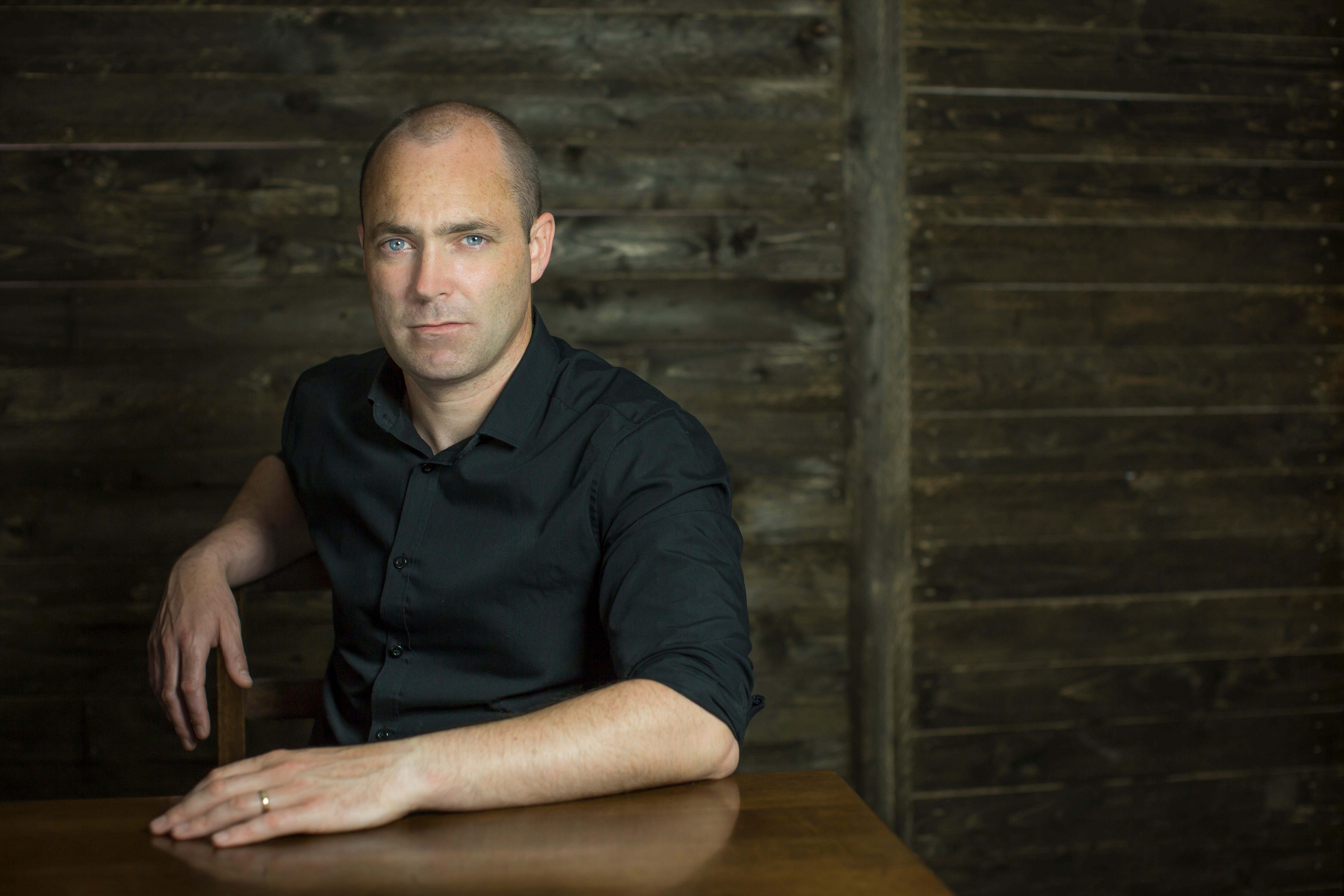
Donal Ryan has long been one of my literary heroes, and I’ve been most fortunate to meet him, and to have him read some of my work. His short fiction and novels are among the finest works ever produced by an Irish writer. He has published seven number-one bestsellers, plus a short story collection. He has won many awards for his work, including the European Union Prize for Literature, the Guardian First Book Award, and six Irish Book Awards, and has been shortlisted for many more, including the Costa Book Award and the Dublin International Literary Award.
He was longlisted for the Booker Prize in 2013 for his debut novel, The Spinning Heart, and in 2018, for his fourth novel, From A Low and Quiet Sea. The Spinning Heart was voted Irish Book of the Decade in 2016.
In 2021, Donal became the first Irish writer to be awarded the Jean Monnet Prize for European Literature. His most recent novel, Heart Be at Peace, won both Novel of the Year and Book of the Year at the Irish Book Awards, and was shortlisted for Novel of the Year at the Nero Book Awards. His work has been adapted for stage and screen and translated into over twenty languages.
Donal is an Associate Professor in the Creative Writing programme at the University of Limerick.
We can’t wait to see what you have for us!