


With the opening of the Frazzled Lit Short Story Award 2026 being just around the corner, I’ve been thinking about form and function in stories quite a lot, and what it is that makes a story stand out in our submissions queue. Coupled with this are a number of submission deadlines I’m hoping to meet with some of my own work. I have two new short stories in progress, and am being very much guided by inspiration and my imagination, two curious creatures to work with, that are not always cooperative. Timid in nature, dreadfully skittish, they will sometimes scurry from the undergrowth of one’s consciousness and place a gift in our hands, while at other times, they take flight at the slightest move towards them. They can be encouraged, yes, but never tamed, and nothing draws them out into the open more than my willingness to enter their domain, and get dirty and sloppy and playful with them; scratch your imagination behind the ear, tickle inspiration under its chin, and they will love you for it! The gifts they offer can be abundant; other times they are cheap and plastic. Unpredictable, that’s their way, for they are as capricious as the weather. In any case, I feel we should be grateful to them for what we receive, and what we can create from their offerings.
I think and write about imagination and inspiration quite often, because I am curious about their natures, and how I can utilise them to create something from almost nothing at all. As writers, we habitually harness their energy to inform our work. Some skill is required, of course, but I feel that a great degree of this can be taught, encouraged, and learned. In the absence of anyone to encourage me, I must play this role myself, to which end I have a rotating screensaver text on my laptop. It reads:
Think wild and free!
This snappy slogan came to me while watching a documentary about Muppet-creator Jim Henson, a man whose mind was utterly unfettered. My slogan reminds me to set no limits on my imagination, to be feral and daring in my engagement with it, to roll around in the mud as I plunge into the deeper regions of inner space to envision what is possible with my craft. What I’m drifting towards, in my customary roundabout way, is that there are no limits to what we can do with our fiction, be it short or long form.
We can be bold, adventurous… audacious!
Practically, what does this mean for me, for you, and for us as editors who have the great pleasure of reading your submissions? Does it mean that stories must be experimental and weird, each one breaking new ground and fathoming the unfathomable?
No, it doesn’t mean that.
What I’m talking about here, and what moves us as humans and as editors, is emotive work that deals more with the micro than the macro, the small spaces in ordinary lives, the seemingly dull moments or spans of time that contain within them something extraordinary. Your story might cover an hour, a lifetime, a brief few seconds of a life. It might exist for no longer than a blink or a breath, or deal with entire generations.
Take a look at last year’s winning story, Limbo Nights by Gary Finnegan, for a great example.
Limbo Nights

FIRST PLACE WINNER in the Frazzled Lit Short Story Award 2025.
Gary Finnegan's fiction has appeared in Litro, The London Magazine, Howl, Ropes, and The Irish Independent. He has been nominated for the Pushcart Prize and was selected for the Freedom to Write Award in 2024 by PEN/Ireland & The John Hewitt Society. Gary has an MA in creative writing and is working on a novel.
Limbo Nights is the story of a bunch of young lads on a pre-college holiday. Through the lens of the protagonist, we grasp the impact of the characters’ life choices, their relational dynamics, the pressure they feel to be awarded a place on the course they desire, and the effects of familial pressure on the choices they make. Thanks to the writer’s skill, we are plunged headfirst into their crazy drunken world, and live through the pivotal moments of their holiday with them. These are ordinary young men at a crucial point in their lives, a point at which the writer allows us to be deeply touched by their humanity, to connect with them for the duration of the story and far beyond its last word, to experience what is extraordinary about them. It’s a simple story in many ways, but is audacious in its rendering. Gary held nothing back, and pulled no punches. In other words, he was courageous in his craft, and skilful in his delivery. Limbo Nights is an excellent story, and a most deserving winner of last year’s competition.
You can read more of the successful stories from last year’s competition in Issue 3, our special competition issue.
What about the language you use in your story? Must it be fancy and overly lyrical? No, and I urge you not to try to impress us with your linguistic verve. What really captures our attention is clarity and precision in prose, and authenticity of voice. How does your narrator/protagonist speak? If you can convey the tilt and tone of their voice, if you can stay true to it and to them, then we will be awed!
My final bit of advice is to write from your heart about what you love and what you fear. Be playful and energetic, be joyous in the act of creation. Nearly everyone can write a story if they set their mind to it, and every story we receive has the possibility of winning this competition. There are options other than winning, too. Fancy making the longlist or shortlist? How about our list of highly commended stories? Any and all of these possibilities are within your reach, and you can rely on our reputation as generous editors to get something from the competition, even if it’s only a tiered rejection. We want to make room for you, we want you to do well, so get writing, send us the best you have to offer, and we will treat it with the love and respect it deserves!
Can’t wait to see what you send us!
Jennifer, co-Editor-in-Chief
Dazzle us in June!
The Frazzled Lit Short Story Award 2026 will open for submissions on June 1st, and we feel hugely honoured to have twice Booker-longlisted and multi award-winning Irish author Donal Ryan as this year’s judge.
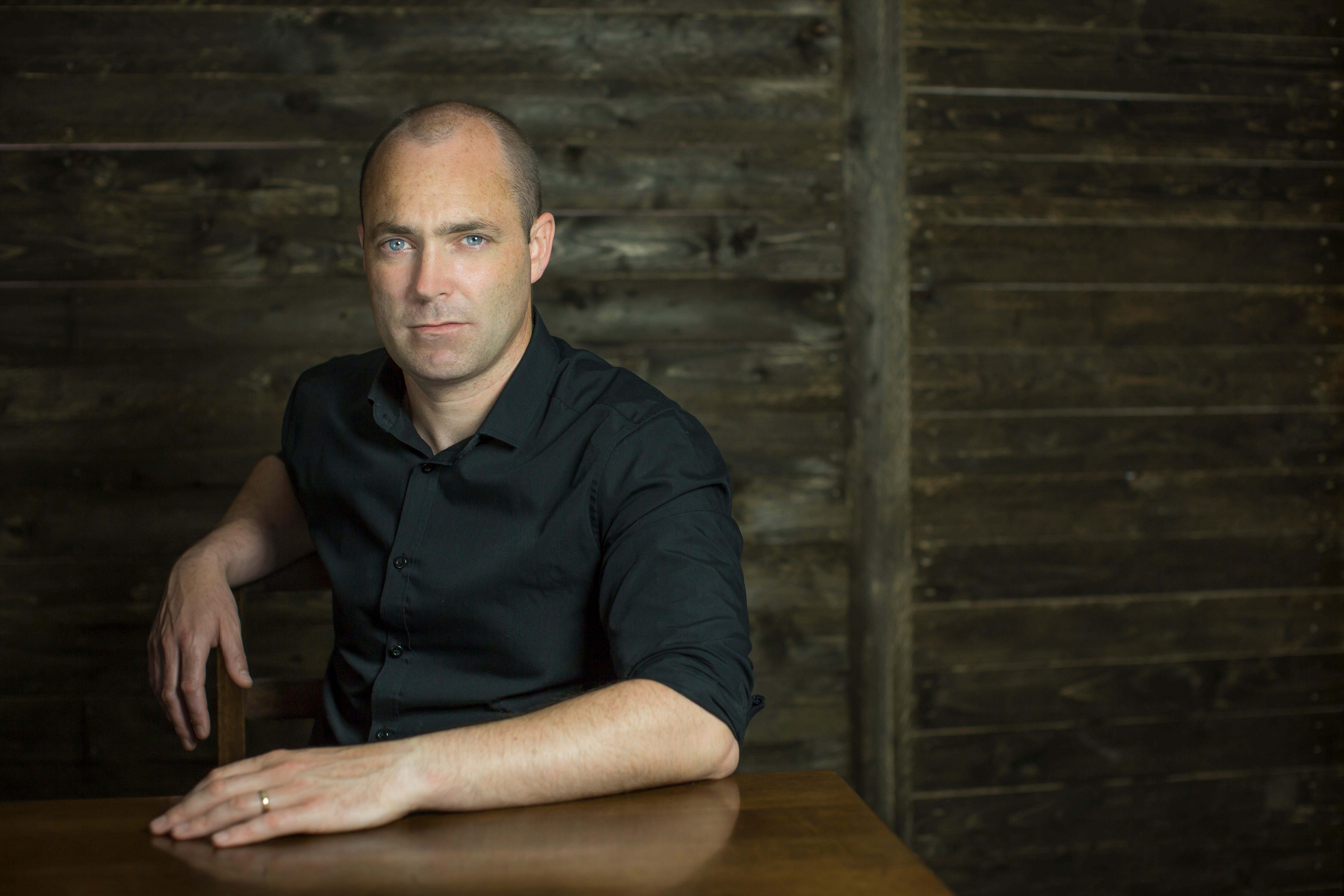
Donal Ryan has long been one of my literary heroes, and I’ve been most fortunate to meet him, and to have him read some of my work. His short fiction and novels are among the finest works ever produced by an Irish writer. He has published seven number-one bestsellers, plus a short story collection. He has won many awards for his work, including the European Union Prize for Literature, the Guardian First Book Award, and six Irish Book Awards, and has been shortlisted for many more, including the Costa Book Award and the Dublin International Literary Award.
He was longlisted for the Booker Prize in 2013 for his debut novel, The Spinning Heart, and in 2018, for his fourth novel, From A Low and Quiet Sea. The Spinning Heart was voted Irish Book of the Decade in 2016.
In 2021, Donal became the first Irish writer to be awarded the Jean Monnet Prize for European Literature. His most recent novel, Heart Be at Peace, won both Novel of the Year and Book of the Year at the Irish Book Awards, and was shortlisted for Novel of the Year at the Nero Book Awards. His work has been adapted for stage and screen and translated into over twenty languages.
Donal is an Associate Professor in the Creative Writing programme at the University of Limerick.
We can’t wait to see what you have for us!